Aromatherapy
Natural Aromatherapy: Quality, Purity and Careful Routines
“Natural” sounds reassuring, but it does not guarantee purity, effectiveness or skin tolerance in an essential oil. Natural aromatherapy is best understood as using plant aromas transparently, sparingly and carefully in wellbeing or skincare routines.
What an informative label includes
- The botanical name and plant part used.
- A complete ingredient list and batch information.
- Production or origin details where available.
- Clear directions, warnings and shelf-life information.
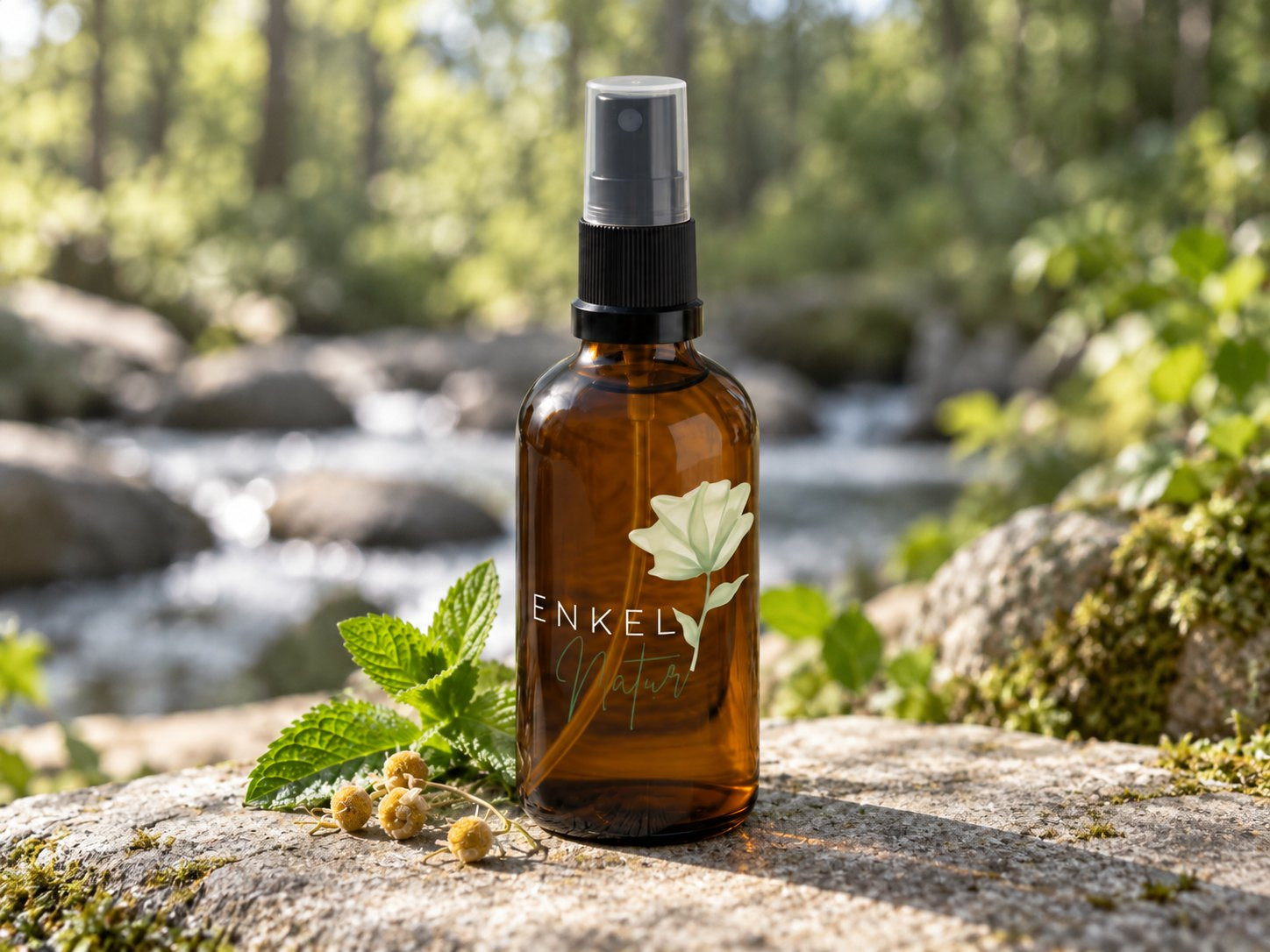
- Suitable light-protective packaging.
Descriptions such as “therapeutic grade” or “100% pure” cannot replace transparent documentation and are not automatically an independent certification.
Four steps for a careful routine
- Choose: Begin with one clearly described product.
- Start low: Do not exceed the manufacturer directions.
- Observe: Stop immediately if skin, eye or airway irritation occurs.
- Store: Keep cool, dark, closed and out of children’s reach.
Distinguish room fragrance from skincare
Not every oil suits every method. A diffuser product is not automatically suitable for skin. Ready-to-use mixtures such as KROPPS-FLÖDE body oil are easier to assess for massage and skincare.
Keep expectations realistic
An aroma may shape the atmosphere and accompany a conscious pause. It does not detoxify the body, automatically strengthen immunity or replace treatment. Germany’s BfR emphasises that essential oils are highly concentrated mixtures that require careful use.
Organic, pure and synthetic
Organic certification concerns defined production standards, but it does not automatically prove tolerance or medical effectiveness. “Pure” is used in different ways in marketing. Natural aroma molecules may still cause allergies, while a synthetic fragrance is not automatically more dangerous. Composition, dose and method are what matter.
Oxidation and shelf life
Oxygen, light and heat change essential oils. Note when a bottle is opened, close it promptly and avoid products whose smell has changed markedly. Old or poorly stored oil should not be applied to skin.
A minimalist starter set
You do not need a large collection. One clearly documented room-fragrance oil or one ready-diluted body product is enough to begin. Test it calmly rather than introducing several new aromas at once.
Common questions
Does a higher price mean better quality?
No. Transparent labelling and appropriate quality controls are more informative than price or luxurious packaging.