Aromatherapy
Lavender Oil: Aroma, Uses and What the Evidence Really Says
Lavender is among the best-known essential oils. Its herbal-floral aroma is frequently associated with calm and evening rituals. People may enjoy that experience, but broad statements such as “treats anxiety” or “cures sleep problems” go beyond the available evidence.
What creates lavender’s aroma?
Lavender essential oil contains compounds including linalool and linalyl acetate. They contribute to its characteristic scent. Laboratory findings or studies of a particular preparation cannot automatically be applied to every lavender product and every method of use.
What does research show?
Studies of inhaled lavender for sleep or tension have produced mixed results. The NCCIH considers evidence insufficient for many claimed uses. The EMA describes traditional use of certain medicinal preparations; that does not create a health claim for cosmetic or aroma products.
Practical ways to use it
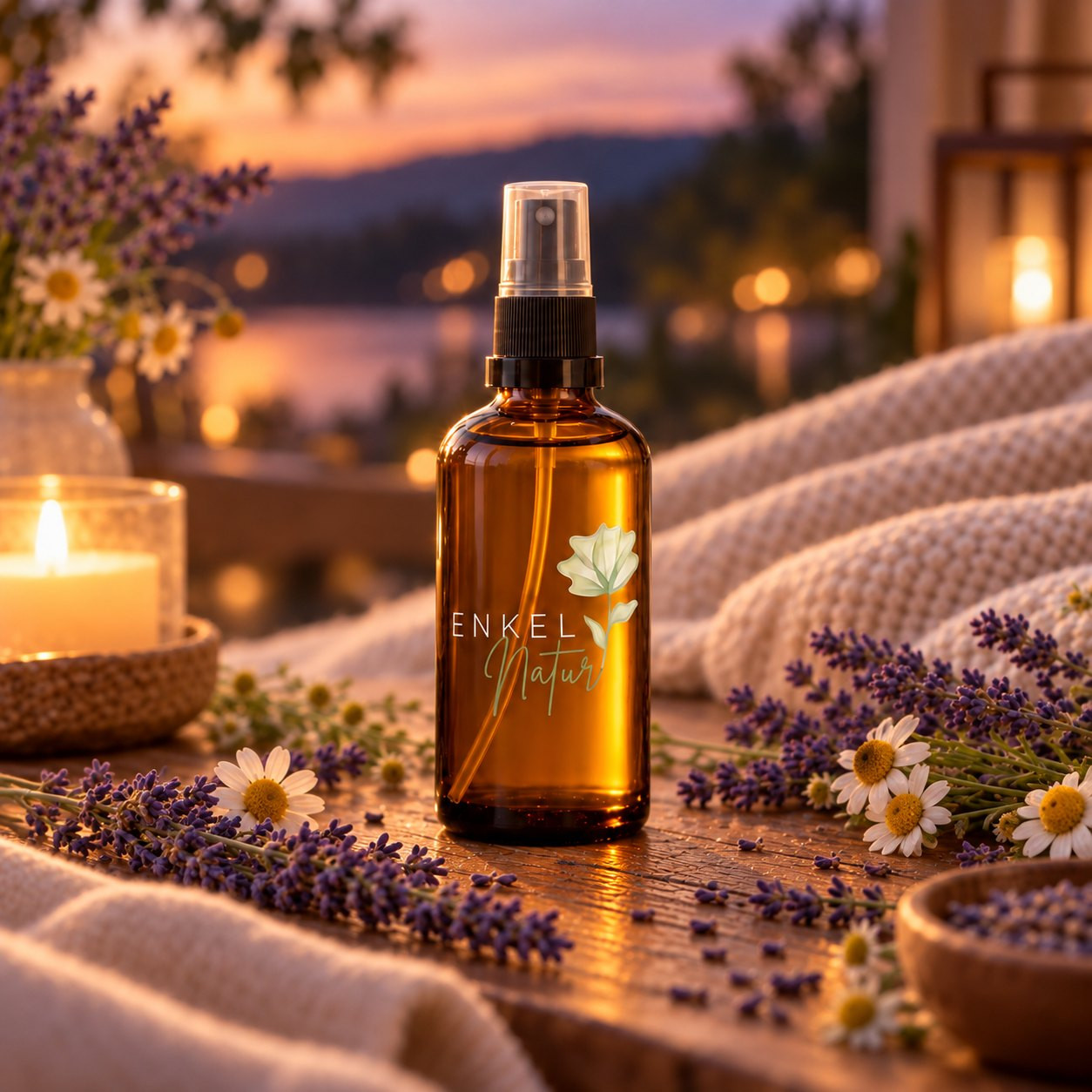
- Use a small amount in a diffuser according to its instructions.
- Place one drop on a separate scent cloth.
- For skin, choose a properly diluted or ready-to-use product.
- Stop and ventilate if the aroma causes discomfort, headache or airway irritation.
Lavender as a ritual, not a therapy
Lavender is best treated as an optional part of a quiet habit: dim the lights, reduce screen time and pause for a few minutes. A MUSKEL-VILA inhaler salt offers a brief, measured aroma experience.
Recognising a well-described product
The label should identify the botanical name – commonly Lavandula angustifolia for true lavender – along with ingredients and batch details. A strong aroma alone does not prove purity. Store the oil away from heat and light and discard it if its smell or consistency changes markedly.
Who should take extra care?
People with sensitive skin, fragrance allergies or respiratory conditions should be especially cautious. Pregnancy and use around babies or young children call for individual professional advice. Pets can also be sensitive to concentrated aromas and should always be able to leave the room.
Common questions
Does lavender automatically make you sleepy?
No. Some people find the scent peaceful, while others notice little or simply do not enjoy it.
Can I use lavender every evening?
If you tolerate it, modest use can form part of your routine. Breaks and regular ventilation are still sensible.